[고2] 2025 09월 – 30번: 공감(empathy)이 갈등을 악화시킬 수 있다는 비판적 견해
Although empathy is widely praised by scholars and public figures, not everyone is an empathy booster. Critics of empathy argue that empathy will not save us from interpersonal and intergroup conflict. In fact, they argue, empathy makes such conflicts worse. These critics maintain that empathy can be exhausting and lead to burnout or insensitivity to suffering. They argue that we tend to empathize strongly with our in-group and resist empathizing with out-groups, and even enjoy the suffering of out-groups in competitive or threatening contexts. Thus, the prescription for more empathy is often counterproductive in cases of conflict. Empathy, they argue, can further encourage conflict and force us into an us vs. them mentality. Finally, even when we try to empathize with others who are dissimilar from us or in unfamiliar contexts, sometimes we are unable to accurately empathize with their experiences, causing further misunderstandings and frustration. Critics of empathy argue that we should give up on empathy and employ other tools in pursuit of social harmony, e.g., rational compassion or moral emotions like fear, anger, and shame.
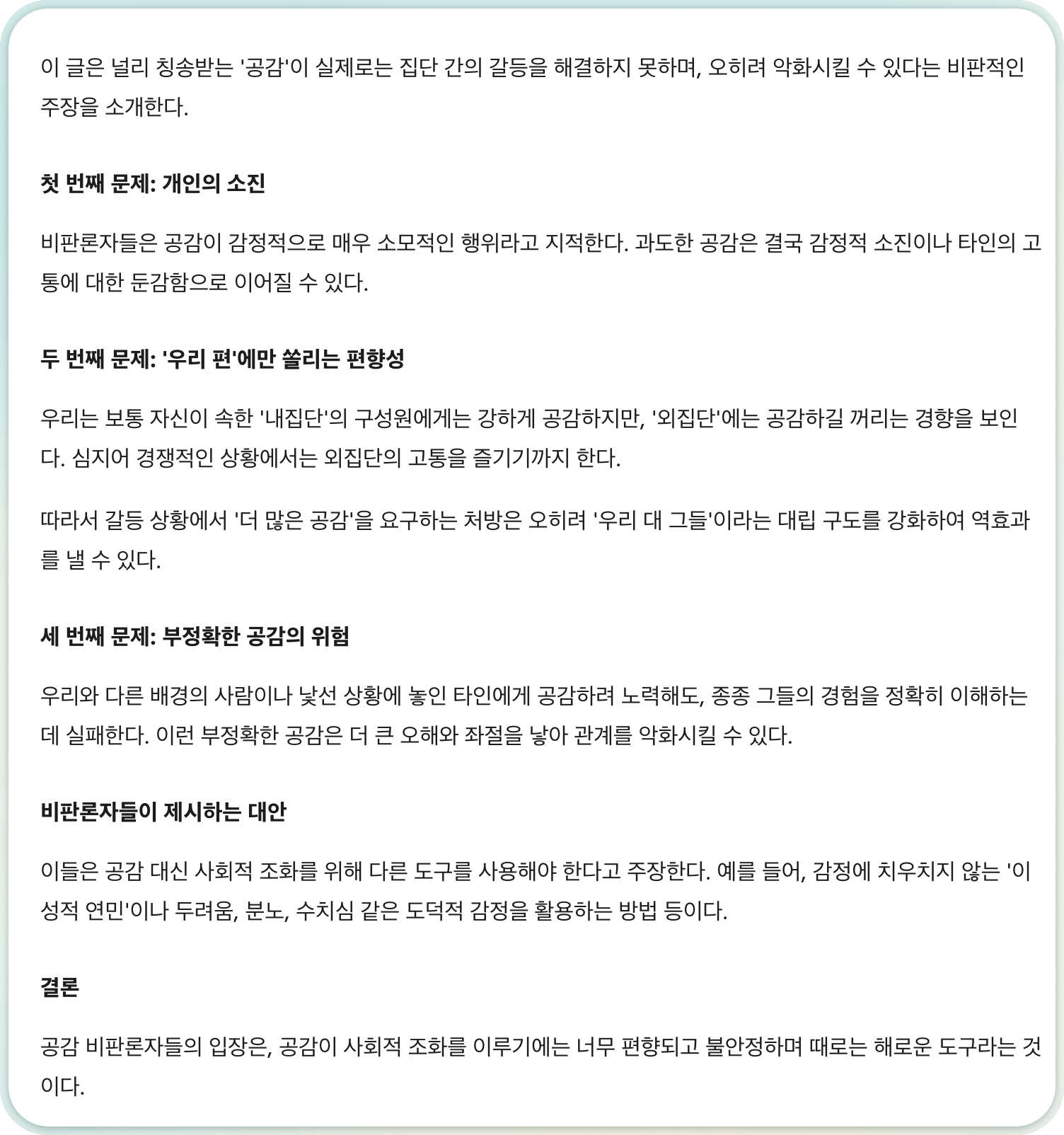
[지문 구조 분석]
| 내용 | 문제 지문 | |
| 문제 제기 | 공감은 칭찬받지만, 비판자들은 공감이 갈등 해결책이 아니며 오히려 갈등을 악화시킨다고 본다 | Although empathy is widely praised by scholars and public figures, not everyone is an empathy booster. Critics of empathy argue that empathy will not save us from interpersonal and intergroup conflict. In fact, they argue, empathy makes such conflicts worse. |
| 근거 1 | 공감은 피로와 무감각을 불러올 수 있다 | These critics maintain that empathy can be exhausting and lead to burnout or insensitivity to suffering. |
| 근거 2 | 우리는 내집단에 강하게 공감하고 외집단에는 공감을 거부하거나 심지어 고통을 즐길 수 있다 | They argue that we tend to empathize strongly with our in-group and resist empathizing with out-groups, and even enjoy the suffering of out-groups in competitive or threatening contexts. |
| 근거 3 | 낯선 집단이나 상황에서 공감하려 해도 정확히 이해하지 못해 오해와 좌절을 낳을 수 있다 | Finally, even when we try to empathize with others who are dissimilar from us or in unfamiliar contexts, sometimes we are unable to accurately empathize with their experiences, causing further misunderstandings and frustration. |
| 결론/대안 | 비판자들은 공감을 버리고 합리적 연민이나 두려움·분노·수치심 같은 도덕적 감정을 활용해야 한다고 본다 | Critics of empathy argue that we should give up on empathy and employ other tools in pursuit of social harmony, e.g., rational compassion or moral emotions like fear, anger, and shame. |
[이미지]

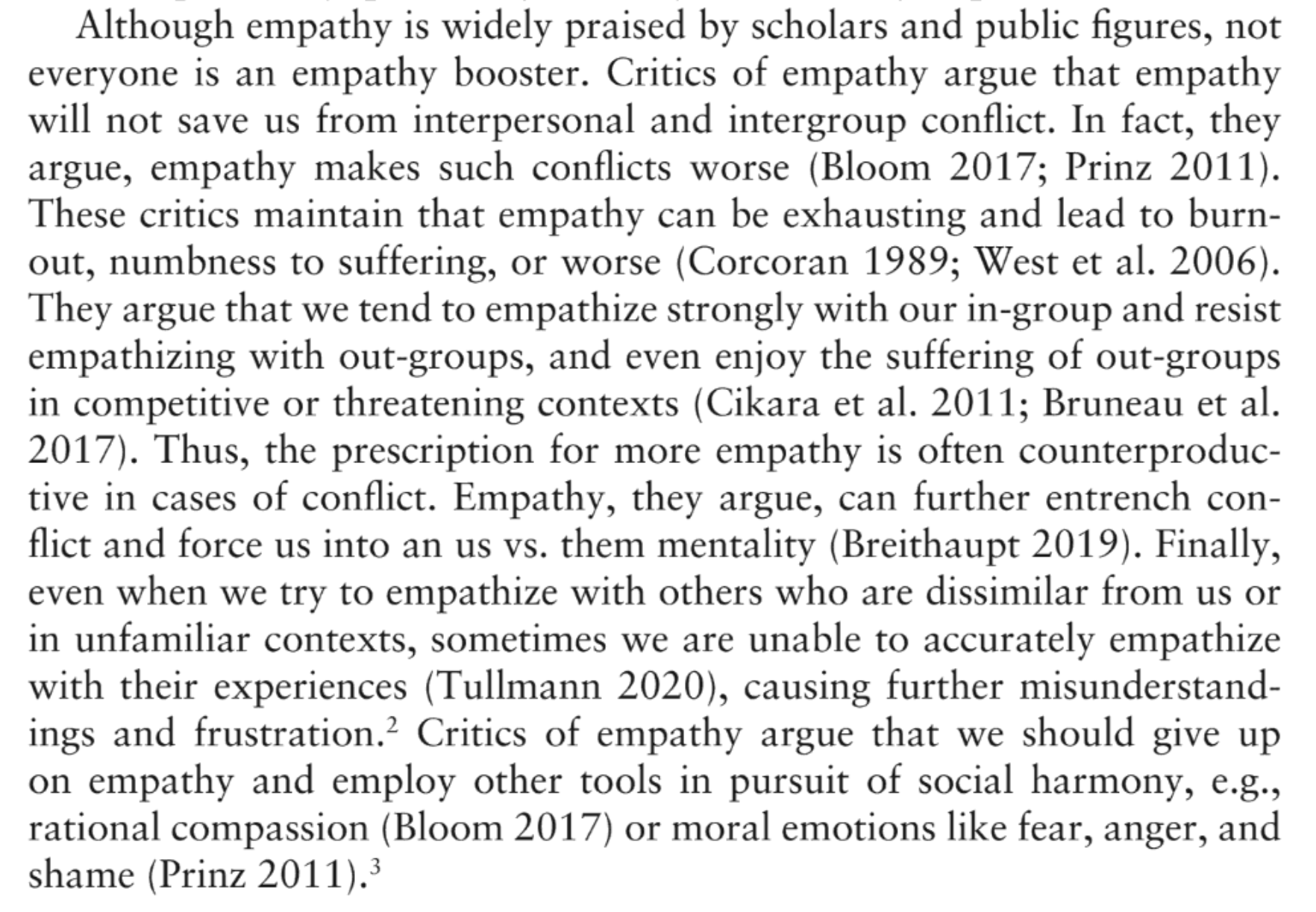
[원문 비교]
| 문제 지문 | 원문 지문 | |
| 1 | Although empathy is widely praised by scholars and public figures, not everyone is an empathy booster. | Although empathy is widely praised by scholars and public figures, not everyone is an empathy booster. |
| 2 | Critics of empathy argue that empathy will not save us from interpersonal and intergroup conflict. | Critics of empathy argue that empathy will not save us from interpersonal and intergroup conflict. |
| 3 | In fact, they argue, empathy makes such conflicts worse. | In fact, they argue, empathy makes such conflicts worse. |
| 4 | These critics maintain that empathy can be exhausting and lead to burnout or insensitivity to suffering. | These critics maintain that empathy can be exhausting and lead to burnout, numbness to suffering, or worse. |
| 5 | They argue that we tend to empathize strongly with our in-group and resist empathizing with out-groups, and even enjoy the suffering of out-groups in competitive or threatening contexts. | They argue that we tend to empathize strongly with our in-group and resist empathizing with out-groups, and even enjoy the suffering of out-groups in competitive or threatening contexts. |
| 6 | Thus, the prescription for more empathy is often counterproductive in cases of conflict. | Thus, the prescription for more empathy is often counterproductive in cases of conflict. |
| 7 | Empathy, they argue, can further encourage conflict and force us into an us vs. them mentality. | Empathy, they argue, can further entrench conflict and force us into an us vs. them mentality. |
| 8 | Finally, even when we try to empathize with others who are dissimilar from us or in unfamiliar contexts, sometimes we are unable to accurately empathize with their experiences, causing further misunderstandings and frustration. | Finally, even when we try to empathize with others who are dissimilar from us or in unfamiliar contexts, sometimes we are unable to accurately empathize with their experiences, causing further misunderstandings and frustration. |
| 9 | Critics of empathy argue that we should give up on empathy and employ other tools in pursuit of social harmony, e.g., rational compassion or moral emotions like fear, anger, and shame. | Critics of empathy argue that we should give up on empathy and employ other tools in pursuit of social harmony, e.g., rational compassion or moral emotions like fear, anger, and shame. |
* 원문 참고 어휘
- numbness 무감각 (= insensitivity)
- entrench (변경이 어렵도록) 단단히 자리 잡게 하다 (= encourage)

관련 자료 바로가기
[고2] 2025년 9월 모의고사 - 한줄해석
안녕하세요, Flow 영어연구소입니다. 2025년도 9월 고2 영어 모의고사>의 한줄해석 자료 올립니다.설명문/실용문을 포함 모든 지문을 대상으로 작업했습니다. 자료는 PDF와 Word 파일 모두 올립니다.
flowedu.tistory.com
[고2] 2025년 9월 모의고사 - 한줄해석 (좌지문 우해석)
안녕하세요, Flow 영어연구소입니다. 오늘은 2025년도 9월 고2 영어 모의고사>의 한줄해석(좌지문 우해석) 자료 올립니다.설명문/실용문 포함 전지문 작업했습니다. 자료는 PDF와 Word 파일 모두 올립
flowedu.tistory.com
[고1~고3] 2025년 9월 모의고사 - 지문 정리 (문제 제작용 hwp 한글 파일)
안녕하세요, Flow 영어연구소입니다. 오늘은 2025년도 9월 고1~3 영어 모의고사>의 지문 텍스트만한글 파일 hwp와 pdf 파일로 정리해서 올립니다.변형문제 출제를 위해 해당 지문들을 hwp 한글 파일로
flowedu.tistory.com
'[고2] 영어 모의고사 자료 > [고2] 25년 9월 자료' 카테고리의 다른 글
| [고2] 2025년 9월 모의고사 34번 - 지문 구성, 그림 설명, 원문 비교 (0) | 2025.09.12 |
|---|---|
| [고2] 2025년 9월 모의고사 33번 - 지문 구성, 그림 설명, 원문 비교 (0) | 2025.09.12 |
| [고2] 2025년 9월 모의고사 32번 - 지문 구성, 그림 설명, 원문 비교 (0) | 2025.09.12 |
| [고2] 2025년 9월 모의고사 31번 - 지문 구성, 그림 설명, 원문 비교 (0) | 2025.09.12 |
| [고2] 2025년 9월 모의고사 29번 - 지문 구성, 그림 설명, 원문 비교 (0) | 2025.09.11 |
| [고2] 2025년 9월 모의고사 24번 - 지문 구성, 그림 설명, 원문 비교 (0) | 2025.09.11 |
| [고2] 2025년 9월 모의고사 23번 - 지문 구성, 그림 설명, 원문 비교 (0) | 2025.09.11 |
| [고2] 2025년 9월 모의고사 22번 - 지문 구성, 그림 설명, 원문 비교 (0) | 2025.09.11 |
커피 한잔의 후원은 콘텐츠 제작에 큰 힘이 됩니다
(모바일에서는 배너를 클릭해 주세요)