[고1] 2025 09월 – 23번: 인간의 감각을 넘어선 자연 현상 인식을 가능하게 하는 도구
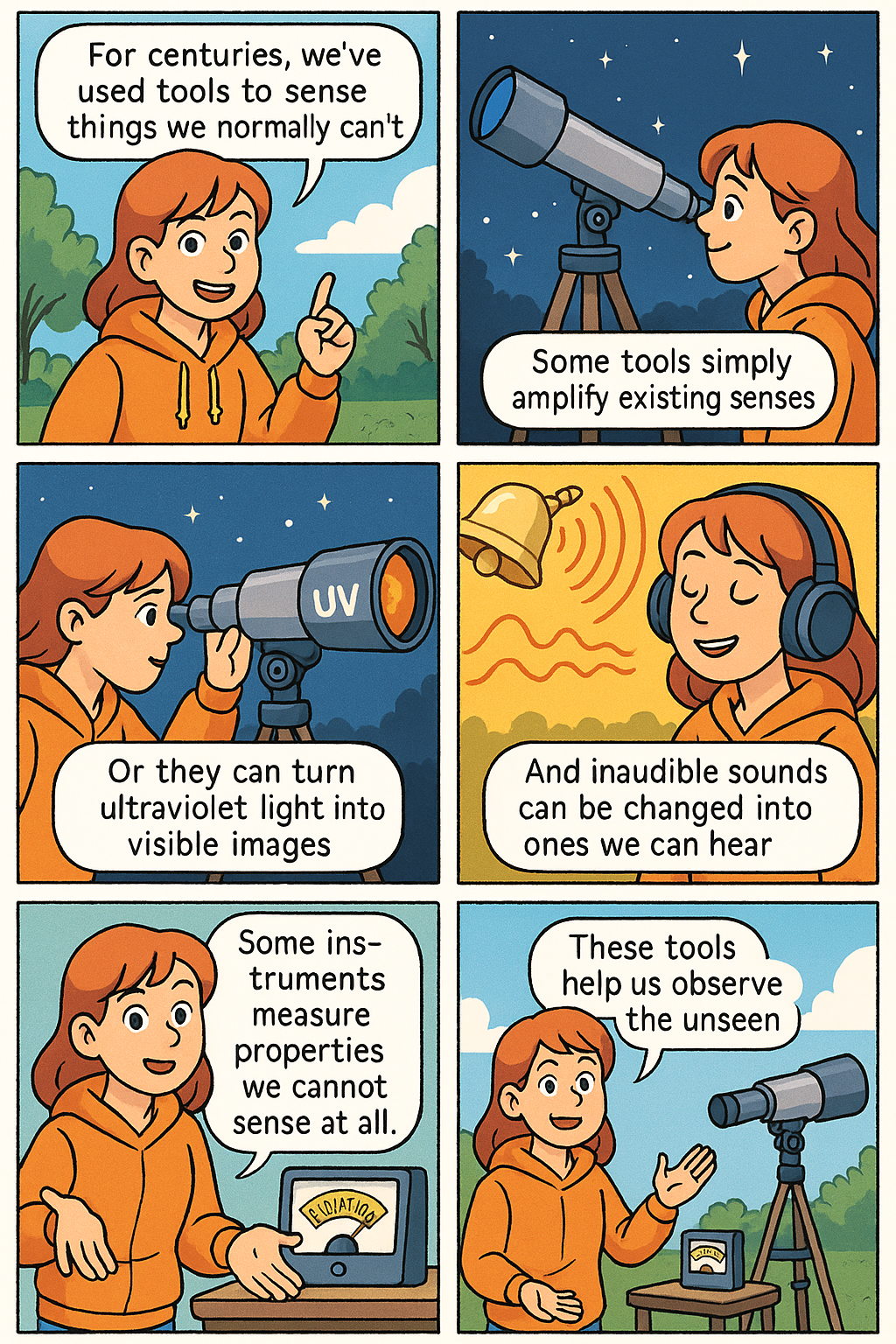
For many centuries, humans have taken advantage of tools that translate and bring into our perception natural phenomena that we can't perceive with our senses. In some cases, this consists of simply amplifying signals that feed into our normal sensory inputs (e.g., telescopes can bring into clear view that which is too far away for our eyes to perceive on their own). Other instruments turn signals that we cannot perceive into ones that we can observe. Some of these take the form of expanding the reach of our current senses, such as creating visible images based on the ultraviolet spectrum of light or changing sounds that are normally outside the range of what human ears can hear into audible signals. Alternatively, some instruments measure properties for which we have no sensory capacity at all and change them into that which we can observe.
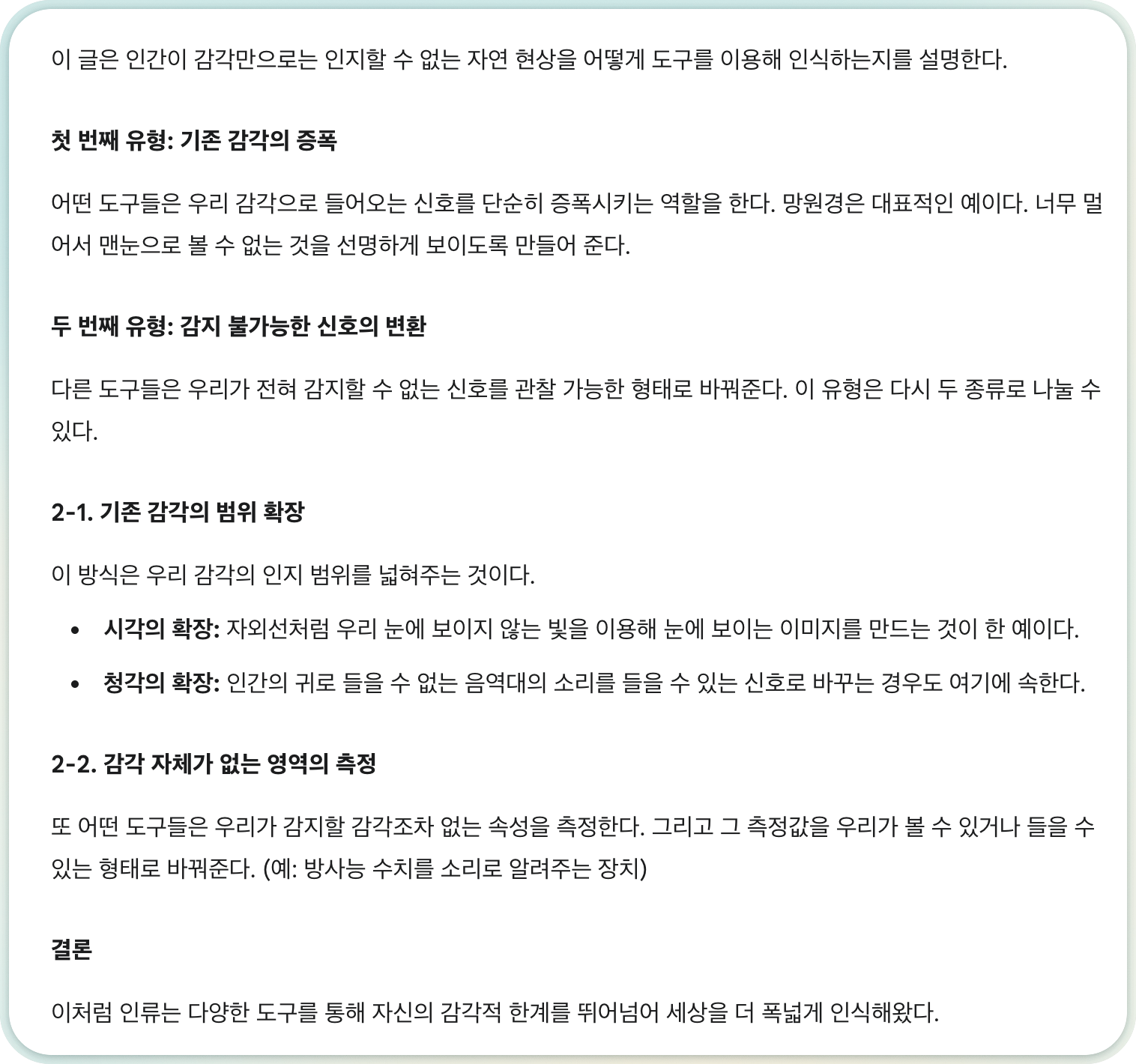
[지문 구조 분석]
| 구분 | 내용 | 원문 |
| 주장 | 인간은 오래전부터 감각으로는 인지할 수 없는 자연 현상을 도구를 통해 인식해왔다 | For many centuries, humans have taken advantage of tools that translate and bring into our perception natural phenomena that we can't perceive with our senses. |
| 예시 | 망원경처럼 기존 감각을 강화하여 멀리 있는 것을 보이게 한다 | In some cases, this consists of simply amplifying signals that feed into our normal sensory inputs (e.g., telescopes can bring into clear view that which is too far away for our eyes to perceive on their own). |
| 예시 | 자외선을 가시광선 이미지로 바꾸거나, 들을 수 없는 소리를 들을 수 있도록 변환한다 | Other instruments turn signals that we cannot perceive into ones that we can observe. Some of these take the form of expanding the reach of our current senses, such as creating visible images based on the ultraviolet spectrum of light or changing sounds that are normally outside the range of what human ears can hear into audible signals. |
| 근거 | 인간 감각으로는 전혀 인지할 수 없는 성질도 기계가 측정해 관찰할 수 있도록 바꿀 수 있다 | Alternatively, some instruments measure properties for which we have no sensory capacity at all and change them into that which we can observe. |
[이미지]
[원문 비교]
| 문제 지문 | 원문 지문 | |
| 1 | For many centuries, humans have taken advantage of tools that translate and bring into our perception natural phenomena that we can't perceive with our senses. | For many centuries, humans have made use of tools that translate and bring into our perception natural phenomena that we can't perceive with our senses. |
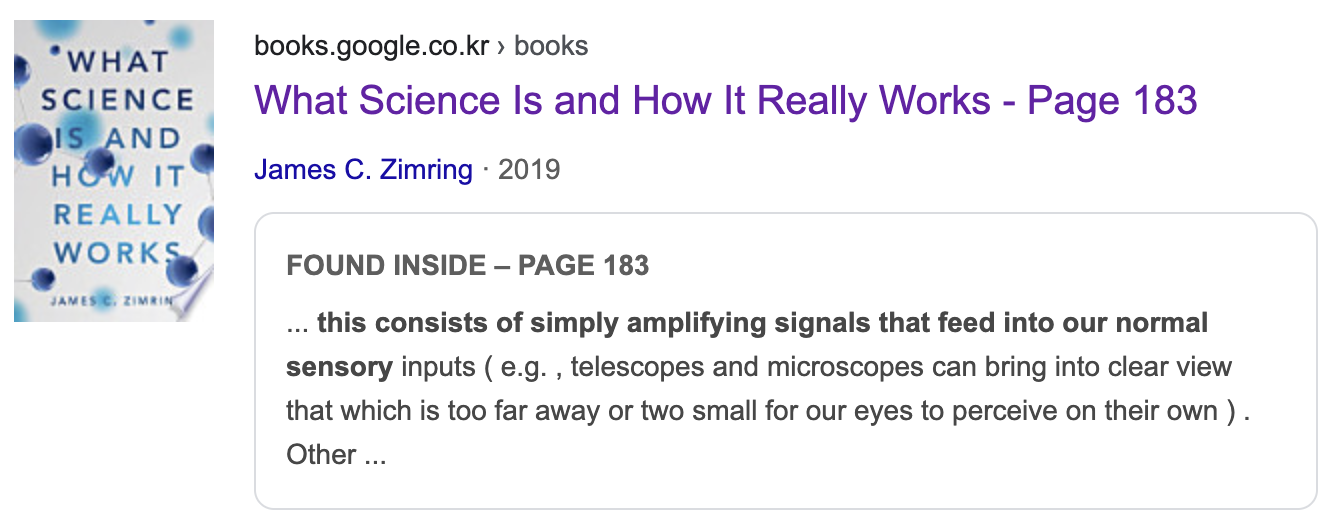
| 2 | In some cases, this consists of simply amplifying signals that feed into our normal sensory inputs (e.g., telescopes can bring into clear view that which is too far away for our eyes to perceive on their own). | In some cases, this consists of simply amplifying signals that feed into our normal sensory inputs (e.g., telescopes and microscopes can bring into clear view that which is too far away or two small for our eyes to perceive on their own). |
| 3 | Other instruments turn signals that we cannot perceive into ones that we can observe. | Other instruments transpose signals that we cannot perceive into ones that we can observe. |
| 4 | Some of these take the form of expanding the reach of our current senses, such as creating visible images based on the ultraviolet spectrum of light or changing sounds that are normally outside the range of what human ears can hear into audible signals. | Some of these take the form of expanding the reach of our current senses, such as creating visible images based on the ultraviolet spectrum of light or converting sounds that are normally outside the range of what human ears can hear into audible signals. |
| 5 | Alternatively, some instruments measure properties for which we have no sensory capacity at all and change them into that which we can observe. | Alternatively, some instruments measure properties for which we have no sensory capacity at all and convert them into that which we can observe (e.g., sensors of electromagnetic fields, radiation detectors, particle detectors for subatomic entities). |
* 원문 참고 어휘
- make use of 이용하다 (= take advantage of)
- microscope 현미경
- transpose 바꾸다, 변환하다 (= turn)
- convert 변환하다 (= change)
- radiation detector 방사선 검출기
- particle detector 입자 검출기
- subatomic 아원자의
- entity 독립체, 실재

관련 자료 바로가기
[고1] 2025년 9월 모의고사 - 한줄해석
안녕하세요, Flow 영어연구소입니다. 2025년도 9월 고1 영어 모의고사>의 한줄해석 자료 올립니다.설명문/실용문을 포함 모든 지문을 대상으로 작업했습니다. 자료는 PDF와 Word 파일 모두 올립니다.
flowedu.tistory.com
[고1] 2025년 9월 모의고사 - 한줄해석 (좌지문 우해석)
안녕하세요, Flow 영어연구소입니다. 오늘은 2025년도 9월 고1 영어 모의고사>의 한줄해석(좌지문 우해석) 자료 올립니다.설명문/실용문 포함 전지문 작업했습니다. 자료는 PDF와 Word 파일 모두 올립
flowedu.tistory.com
[고1~고3] 2025년 9월 모의고사 - 지문 정리 (문제 제작용 hwp 한글 파일)
안녕하세요, Flow 영어연구소입니다. 오늘은 2025년도 9월 고1~3 영어 모의고사>의 지문 텍스트만한글 파일 hwp와 pdf 파일로 정리해서 올립니다.변형문제 출제를 위해 해당 지문들을 hwp 한글 파일로
flowedu.tistory.com
'[고1] 영어 모의고사 자료 > [고1] 25년 9월 자료' 카테고리의 다른 글
| [고1] 2025년 9월 모의고사 31번 - 지문 구성, 그림 설명, 원문 비교 (0) | 2025.09.09 |
|---|---|
| [고1] 2025년 9월 모의고사 30번 - 지문 구성, 그림 설명, 원문 비교 (0) | 2025.09.08 |
| [고1] 2025년 9월 모의고사 29번 - 지문 구성, 그림 설명, 원문 비교 (0) | 2025.09.08 |
| [고1] 2025년 9월 모의고사 24번 - 지문 구성, 그림 설명, 원문 비교 (0) | 2025.09.08 |
| [고1] 2025년 9월 모의고사 22번 - 지문 구성, 그림 설명, 원문 비교 (0) | 2025.09.08 |
| [고1] 2025년 9월 모의고사 21번 - 지문 구성, 그림 설명, 원문 비교 (0) | 2025.09.08 |
| [고1] 2025년 9월 모의고사 20번 - 지문 구성, 그림 설명, 원문 비교 (0) | 2025.09.08 |
| [고1] 2025년 9월 모의고사 - 한줄해석 (좌지문 우해석) (4) | 2025.09.04 |
커피 한잔의 후원은 콘텐츠 제작에 큰 힘이 됩니다
(모바일에서는 배너를 클릭해 주세요)