[고1] 2025 09월 – 41~42번: 고객을 방어적으로 만드는 비효과적인 판매 접근법의 문제점
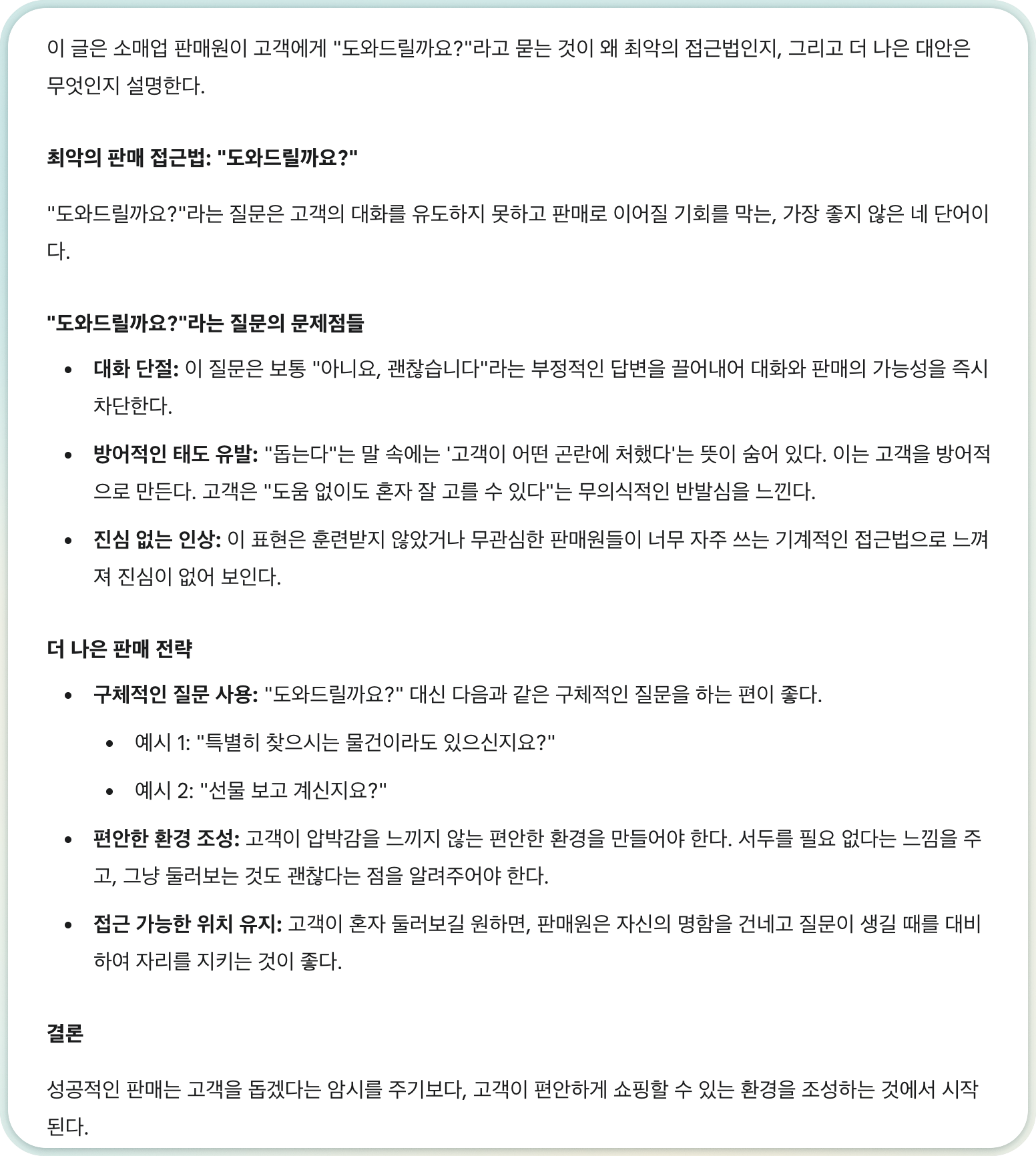
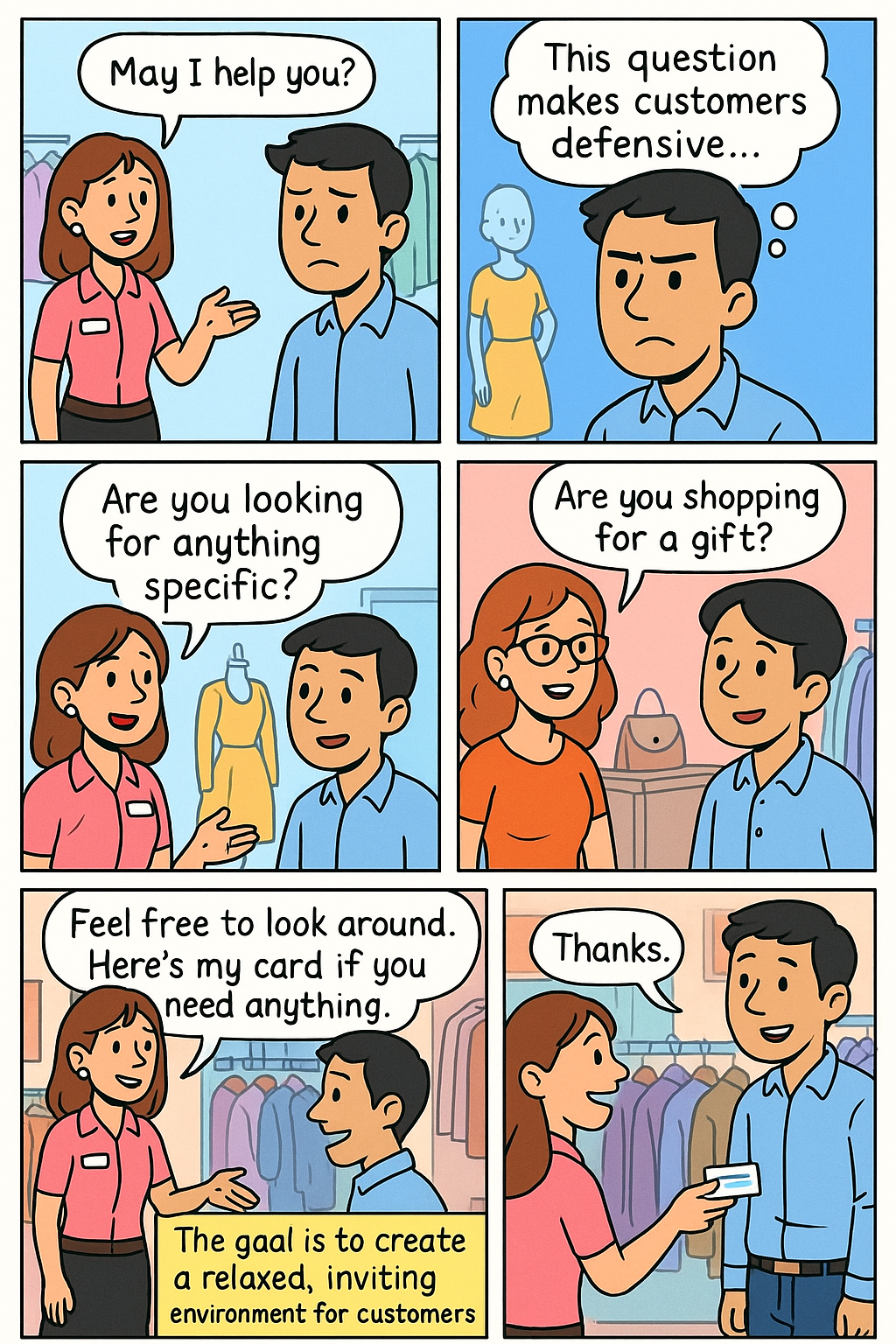
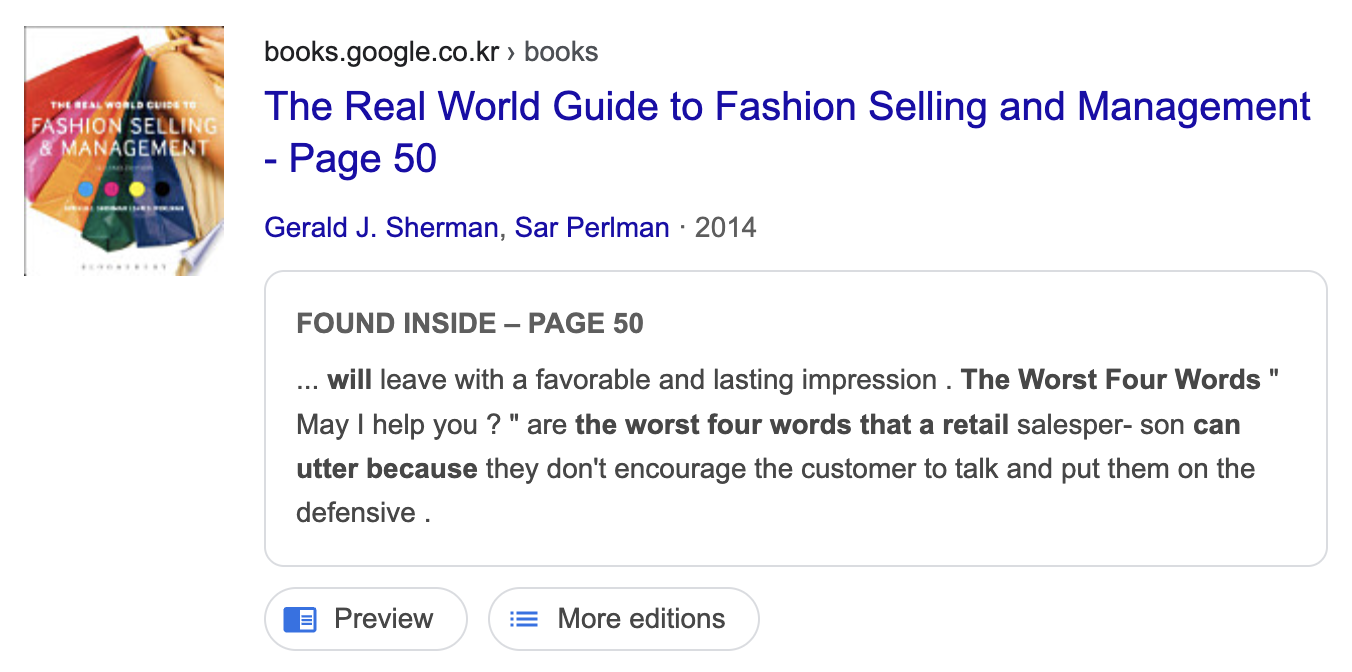
"May I help you?" are the worst four words that a retail salesperson can utter because they don't encourage the customer to talk and put them on the defensive. The four words usually draw out a negative response that stops cold a sales transaction. Examples of better questions to use when approaching customers are "Is there anything in particular that you are looking for?" and "Are you shopping for a gift?" If a fashion salesperson approached you with "May I help you?" chances are you would feel the salesperson didn't care. This line is a rote approach that is so overused by untrained and uninterested salespeople. In fact, most of us shudder in horror on hearing these words. The very meaning of the question "May I help you?" implies that the customer is in trouble of some sort and needs rescuing. This almost always puts the customer on the defense. "No, thank you" is usually the immediate response, even if the customer is actually in need of assistance. The subconscious thought by the customer is often "I'm smart enough to figure out what I want, and I don't need your help!" If customers feel pressured or cornered, then salespeople won't make any sales. The approach has to promote a comfortable environment that makes customers feel there is no rush. Furthermore, if customers just want to look around, they should feel that it is all right to do so. In situations where customers really do want to look around on their own, salespeople should give customers their business cards and keep themselves accessible in case customers have questions or concerns.
[지문 구조 분석]
| 내용 | 원문 | |
| 주장 | “May I help you?”는 소매점 판매원이 해서는 안 될 최악의 말이며, 고객을 방어적으로 만든다 | "May I help you?" are the worst four words that a retail salesperson can utter because they don't encourage the customer to talk and put them on the defensive. The four words usually draw out a negative response that stops cold a sales transaction. |
| 예시 | 더 나은 접근은 “특별히 찾으시는 것이 있나요?” 또는 “선물용으로 쇼핑하시나요?” 같은 질문이다 | Examples of better questions to use when approaching customers are "Is there anything in particular that you are looking for?" and "Are you shopping for a gift?" |
| 근거 | “May I help you?”는 무관심하고 훈련되지 않은 판매원의 진부한 접근으로, 고객을 불쾌하게 만든다 | If a fashion salesperson approached you with "May I help you?" chances are you would feel the salesperson didn't care. This line is a rote approach that is so overused by untrained and uninterested salespeople. In fact, most of us shudder in horror on hearing these words. |
| 설명 | 이 질문은 고객이 곤경에 빠져 도움을 필요로 한다는 뉘앙스를 주며, 방어적인 “No, thank you”라는 반응을 불러온다 | The very meaning of the question "May I help you?" implies that the customer is in trouble of some sort and needs rescuing. This almost always puts the customer on the defense. "No, thank you" is usually the immediate response, even if the customer is actually in need of assistance. The subconscious thought by the customer is often "I'm smart enough to figure out what I want, and I don't need your help!" |
| 결론 | 고객이 압박감을 느끼면 구매로 이어지지 않으며, 편안하게 둘러볼 수 있는 환경과 적절한 접근이 필요하다 | If customers feel pressured or cornered, then salespeople won't make any sales. The approach has to promote a comfortable environment that makes customers feel there is no rush. Furthermore, if customers just want to look around, they should feel that it is all right to do so. In situations where customers really do want to look around on their own, salespeople should give customers their business cards and keep themselves accessible in case customers have questions or concerns. |
[이미지]
[원문 비교]
| 문제 지문 | 원문 지문 | |
| 1 | "May I help you?" are the worst four words that a retail salesperson can utter because they don't encourage the customer to talk and put them on the defensive. | "May I help you?" are the worst four words that a retail salesperson can utter because they don't encourage the customer to talk and put them on the defensive. |
| 2 | The four words usually draw out a negative response that stops cold a sales transaction. | The four words usually elicit a negative response that stops cold a sales transaction. |
| 3 | Examples of better questions to use when approaching customers are "Is there anything in particular that you are looking for?" and "Are you shopping for a gift?" | Examples of better questions to use when approaching customers are "Is there anything in particular that you are looking for?" and "Are you shopping for a gift?" |
| 4 | If a fashion salesperson approached you with "May I help you?" chances are you would feel the salesperson didn't care. | If a fashion salesperson approached you with "May I help you?" chances are you would feel the salesperson didn't care. |
| 5 | This line is a rote approach that is so overused by untrained and uninterested salespeople. | This line is a rote approach that is so overused by untrained and uninterested salespeople. |
| 6 | In fact, most of us shudder in horror on hearing these words. | In fact, most of us shudder in horror on hearing these words. |
| 7 | The very meaning of the question "May I help you?" implies that the customer is in trouble of some sort and needs rescuing. | The very meaning of the question "May I help you?" implies that the customer is in trouble of some sort and needs rescuing. |
| 8 | This almost always puts the customer on the defense. | This almost always puts the customer on the defense. |
| 9 | "No, thank you" is usually the immediate response, even if the customer is actually in need of assistance. | "No, thank you" is usually the immediate response, even if the customer is actually in need of assistance. |
| 10 | The subconscious thought by the customer is often "I'm smart enough to figure out what I want, and I don't need your help!" | The subconscious thought by the customer is often "I'm smart enough to figure out what I want, and I don't need your help!" |
| 11 | If customers feel pressured or cornered, then salespeople won't make any sales. | If customers feel pressured or cornered, then salespeople won't make any sales. |
| 12 | The approach has to promote a comfortable environment that makes customers feel there is no rush. | The approach has to promote a comfortable environment that makes customers feel there is no rush. |
| 13 | Furthermore, if customers just want to look around, they should feel that it is all right to do so. | Furthermore, if customers just want to look around, they should feel that it is all right to do so. |
| 14 | In situations where customers really do want to look around on their own, salespeople should give customers their business cards and keep themselves accessible in case customers have questions or concerns. | In situations where customers really do want to look around on their own, salespeople should give customers their business cards and keep themselves accessible in case customers have questions or concerns. |
* 원문 참고 어휘
- elicit 이끌어내다, 유발하다 (= draw out)

관련 자료 바로가기
[고1] 2025년 9월 모의고사 - 한줄해석
안녕하세요, Flow 영어연구소입니다. 2025년도 9월 고1 영어 모의고사>의 한줄해석 자료 올립니다.설명문/실용문을 포함 모든 지문을 대상으로 작업했습니다. 자료는 PDF와 Word 파일 모두 올립니다.
flowedu.tistory.com
[고1] 2025년 9월 모의고사 - 한줄해석 (좌지문 우해석)
안녕하세요, Flow 영어연구소입니다. 오늘은 2025년도 9월 고1 영어 모의고사>의 한줄해석(좌지문 우해석) 자료 올립니다.설명문/실용문 포함 전지문 작업했습니다. 자료는 PDF와 Word 파일 모두 올립
flowedu.tistory.com
[고1~고3] 2025년 9월 모의고사 - 지문 정리 (문제 제작용 hwp 한글 파일)
안녕하세요, Flow 영어연구소입니다. 오늘은 2025년도 9월 고1~3 영어 모의고사>의 지문 텍스트만한글 파일 hwp와 pdf 파일로 정리해서 올립니다.변형문제 출제를 위해 해당 지문들을 hwp 한글 파일로
flowedu.tistory.com
'[고1] 영어 모의고사 자료 > [고1] 25년 9월 자료' 카테고리의 다른 글
| [고1] 2025년 9월 모의고사 - 어휘 정리 (동의어/반의어 포함) (0) | 2025.11.21 |
|---|---|
| [고1] 2025년 9월 모의고사 - 지문 요약 by ChatGPT-4.1-mini (2) | 2025.09.19 |
| [고1] 2025년 9월 모의고사 - 문장어순배열 (20~24번) (0) | 2025.09.15 |
| [고1] 2025년 9월 모의고사 40번 - 지문 구성, 그림 설명, 원문 비교 (0) | 2025.09.09 |
| [고1] 2025년 9월 모의고사 39번 - 지문 구성, 그림 설명, 원문 비교 (0) | 2025.09.09 |
| [고1] 2025년 9월 모의고사 38번 - 지문 구성, 그림 설명, 원문 비교 (0) | 2025.09.09 |
| [고1] 2025년 9월 모의고사 37번 - 지문 구성, 그림 설명, 원문 비교 (0) | 2025.09.09 |
| [고1] 2025년 9월 모의고사 36번 - 지문 구성, 그림 설명, 원문 비교 (0) | 2025.09.09 |
커피 한잔의 후원은 콘텐츠 제작에 큰 힘이 됩니다
(모바일에서는 배너를 클릭해 주세요)