[고1] 2025 09월 – 35번: 인공 지능(artificial intelligence) 개념의 역사적 발전 과정
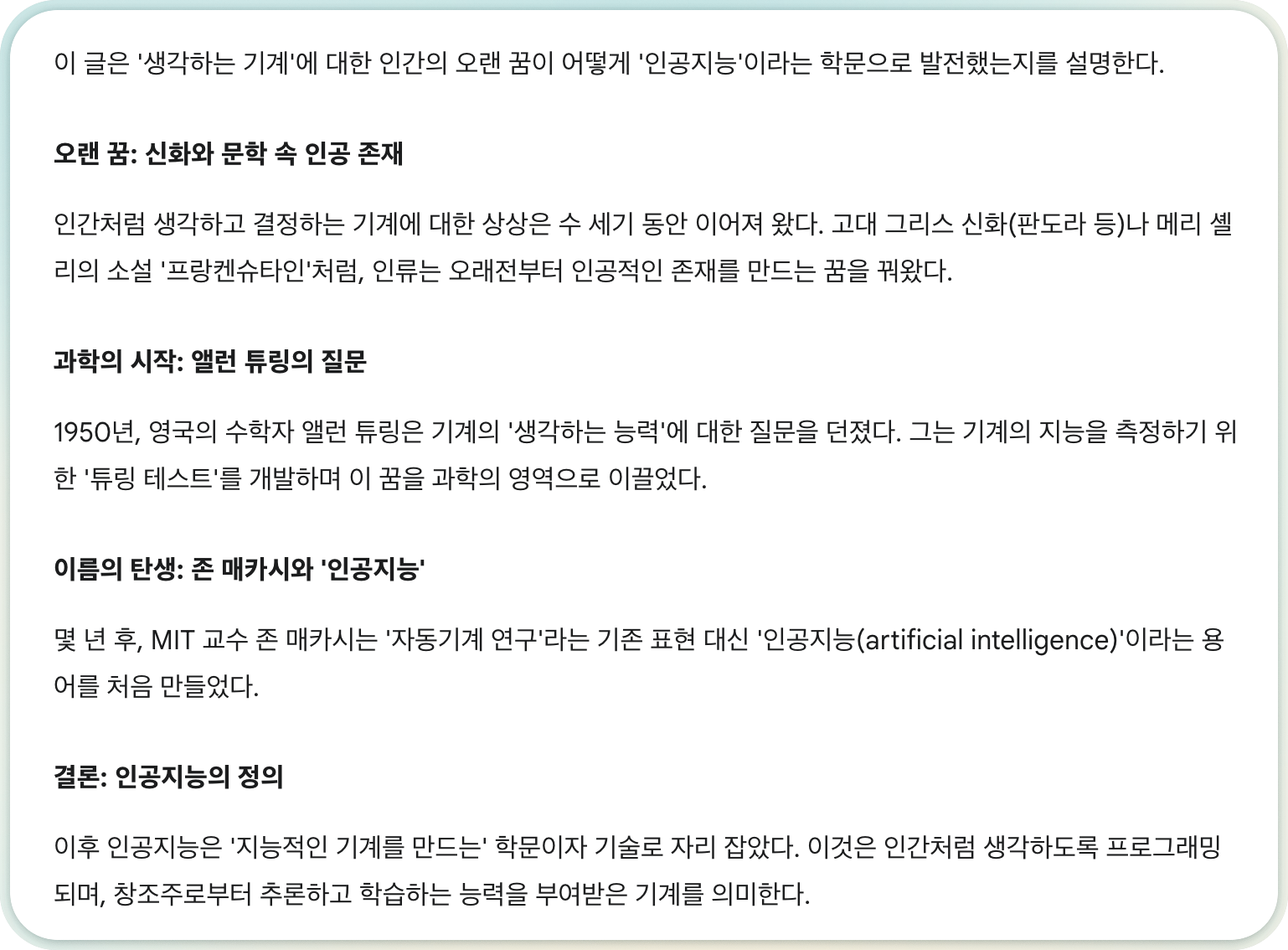
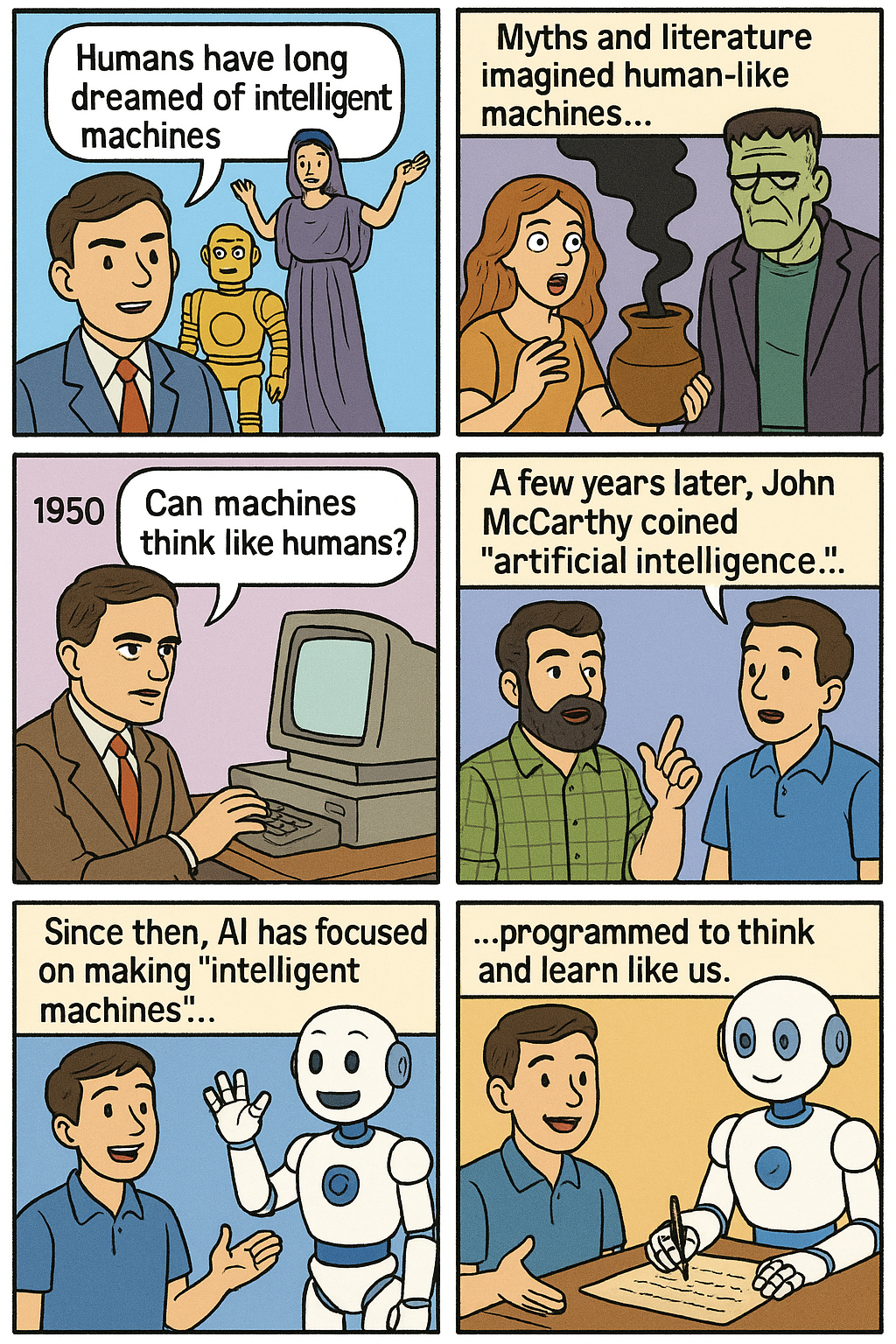
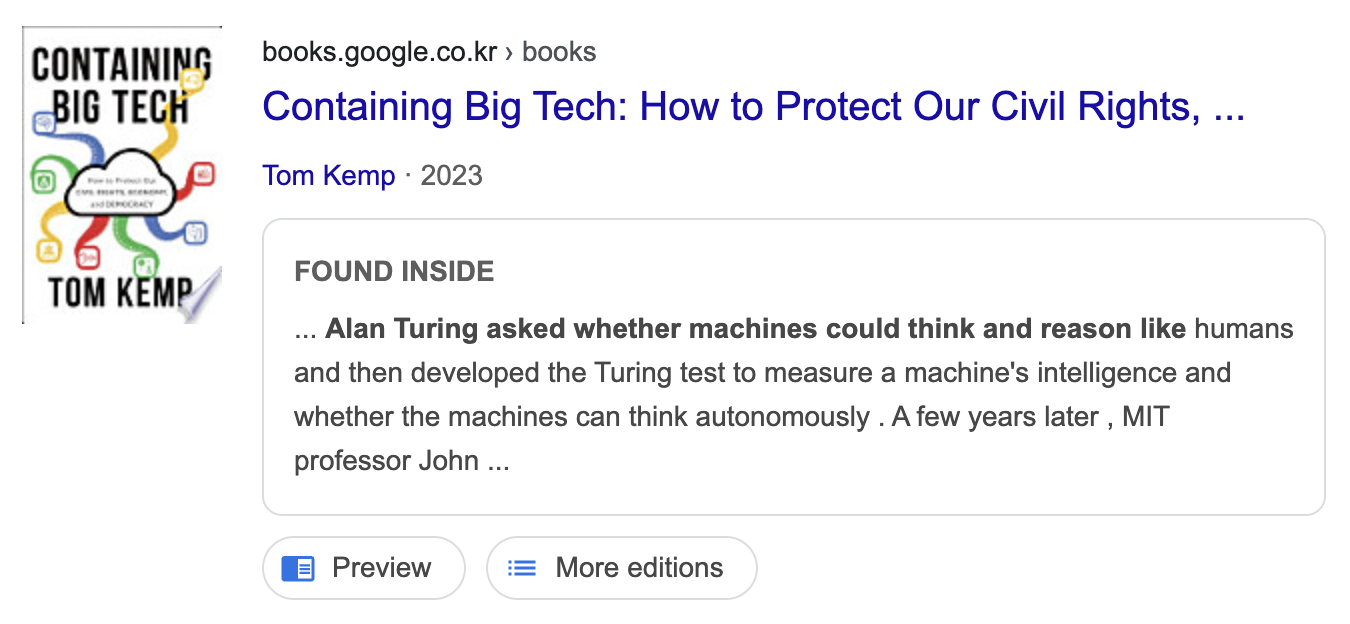
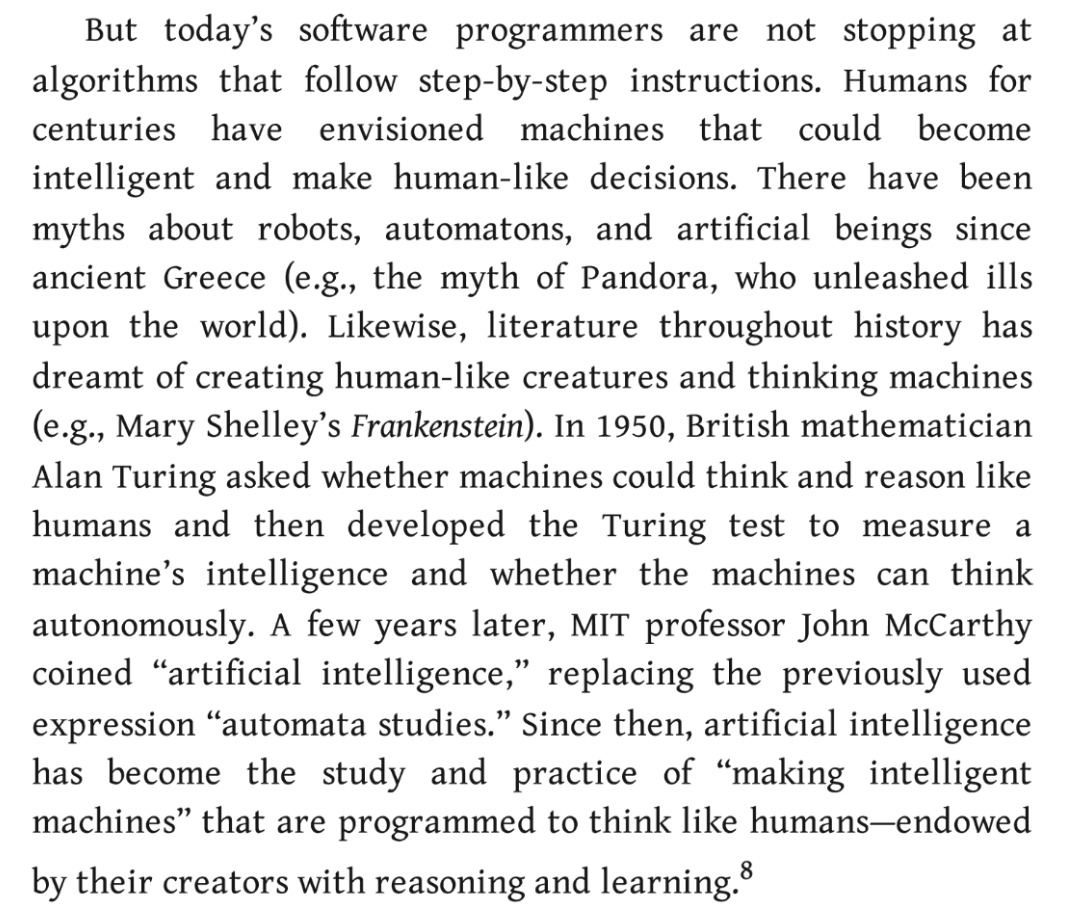
Humans for centuries have dreamed of machines that could become intelligent and make human-like decisions. There have been myths about robots, automatons, and artificial beings since ancient Greece (e.g., the myth of Pandora, who released ills upon the world). Likewise, literature throughout history has dreamed of creating human-like creatures and thinking machines (e.g., Mary Shelley's Frankenstein). In 1950, British mathematician Alan Turing asked whether machines could think and reason like humans and then developed the Turing test to measure a machine's intelligence and whether the machines can think autonomously. A few years later, MIT professor John McCarthy coined "artificial intelligence," replacing the previously used expression "automata studies." Since then, artificial intelligence has become the study and practice of "making intelligent machines" that are programmed to think like humans ─ endowed by their creators with reasoning and learning.
[지문 구조 분석]
| 구분 | 내용 | 원문 |
| 주장 | 인간은 오래전부터 인간처럼 사고하고 결정을 내리는 지능적인 기계를 꿈꿔왔다 | Humans for centuries have dreamed of machines that could become intelligent and make human-like decisions. |
| 배경 설명 | 고대 그리스 신화에서 판도라 신화처럼 인공 존재에 관한 이야기가 있었고, 문학에서도 인간 같은 기계가 다뤄졌다 | There have been myths about robots, automatons, and artificial beings since ancient Greece (e.g., the myth of Pandora, who released ills upon the world). Likewise, literature throughout history has dreamed of creating human-like creatures and thinking machines (e.g., Mary Shelley's Frankenstein). |
| 근거 | 1950년 앨런 튜링은 기계가 인간처럼 사고할 수 있는지 물었고, 이를 측정하기 위해 튜링 테스트를 만들었다 | In 1950, British mathematician Alan Turing asked whether machines could think and reason like humans and then developed the Turing test to measure a machine's intelligence and whether the machines can think autonomously. |
| 근거 | 이후 존 매카시는 ‘인공지능’이라는 용어를 만들어 이전의 ‘자동장치 연구’라는 표현을 대체했다 | A few years later, MIT professor John McCarthy coined "artificial intelligence," replacing the previously used expression "automata studies." |
| 결론 | 인공지능은 인간처럼 사고하도록 프로그래밍된 지능적 기계를 만드는 연구와 실천의 영역으로 자리 잡았다 | Since then, artificial intelligence has become the study and practice of "making intelligent machines" that are programmed to think like humans ─ endowed by their creators with reasoning and learning. |
[이미지]
[원문 비교]
| 문제 지문 | 원문 지문 | |
| 1 | Humans for centuries have dreamed of machines that could become intelligent and make human-like decisions. | Humans for centuries have envisioned machines that could become intelligent and make human-like decisions. |
| 2 | There have been myths about robots, automatons, and artificial beings since ancient Greece (e.g., the myth of Pandora, who released ills upon the world). | There have been myths about robots, automatons, and artificial beings since ancient Greece (e.g., the myth of Pandora, who unleashed ills upon the world). |
| 3 | Likewise, literature throughout history has dreamed of creating human-like creatures and thinking machines (e.g., Mary Shelley's Frankenstein). | Likewise, literature throughout history has dreamt of creating human-like creatures and thinking machines (e.g., Mary Shelley's Frankenstein). |
| 4 | In 1950, British mathematician Alan Turing asked whether machines could think and reason like humans and then developed the Turing test to measure a machine's intelligence and whether the machines can think autonomously. | In 1950, British mathematician Alan Turing asked whether machines could think and reason like humans and then developed the Turing test to measure a machine's intelligence and whether the machines can think autonomously. |
| 5 | A few years later, MIT professor John McCarthy coined "artificial intelligence," replacing the previously used expression "automata studies." | A few years later, MIT professor John McCarthy coined "artificial intelligence," replacing the previously used expression "automata studies." |
| 6 | Since then, artificial intelligence has become the study and practice of "making intelligent machines" that are programmed to think like humans ─ endowed by their creators with reasoning and learning. | Since then, artificial intelligence has become the study and practice of "making intelligent machines" that are programmed to think like humans—endowed by their creators with reasoning and learning. |
* 원문 참고 어휘
- envision 상상하다, 구상하다 (= dream)
- unleash 풀어놓다, 촉발시키다 (= release)
관련 자료 바로가기
[고1] 2025년 9월 모의고사 - 한줄해석
안녕하세요, Flow 영어연구소입니다. 2025년도 9월 고1 영어 모의고사>의 한줄해석 자료 올립니다.설명문/실용문을 포함 모든 지문을 대상으로 작업했습니다. 자료는 PDF와 Word 파일 모두 올립니다.
flowedu.tistory.com
[고1] 2025년 9월 모의고사 - 한줄해석 (좌지문 우해석)
안녕하세요, Flow 영어연구소입니다. 오늘은 2025년도 9월 고1 영어 모의고사>의 한줄해석(좌지문 우해석) 자료 올립니다.설명문/실용문 포함 전지문 작업했습니다. 자료는 PDF와 Word 파일 모두 올립
flowedu.tistory.com
[고1~고3] 2025년 9월 모의고사 - 지문 정리 (문제 제작용 hwp 한글 파일)
안녕하세요, Flow 영어연구소입니다. 오늘은 2025년도 9월 고1~3 영어 모의고사>의 지문 텍스트만한글 파일 hwp와 pdf 파일로 정리해서 올립니다.변형문제 출제를 위해 해당 지문들을 hwp 한글 파일로
flowedu.tistory.com
'[고1] 영어 모의고사 자료 > [고1] 25년 9월 자료' 카테고리의 다른 글
| [고1] 2025년 9월 모의고사 39번 - 지문 구성, 그림 설명, 원문 비교 (0) | 2025.09.09 |
|---|---|
| [고1] 2025년 9월 모의고사 38번 - 지문 구성, 그림 설명, 원문 비교 (0) | 2025.09.09 |
| [고1] 2025년 9월 모의고사 37번 - 지문 구성, 그림 설명, 원문 비교 (0) | 2025.09.09 |
| [고1] 2025년 9월 모의고사 36번 - 지문 구성, 그림 설명, 원문 비교 (0) | 2025.09.09 |
| [고1] 2025년 9월 모의고사 34번 - 지문 구성, 그림 설명, 원문 비교 (10) | 2025.09.09 |
| [고1] 2025년 9월 모의고사 33번 - 지문 구성, 그림 설명, 원문 비교 (0) | 2025.09.09 |
| [고1] 2025년 9월 모의고사 32번 - 지문 구성, 그림 설명, 원문 비교 (0) | 2025.09.09 |
| [고1] 2025년 9월 모의고사 31번 - 지문 구성, 그림 설명, 원문 비교 (0) | 2025.09.09 |
커피 한잔의 후원은 콘텐츠 제작에 큰 힘이 됩니다
(모바일에서는 배너를 클릭해 주세요)